Cybersecurity is often framed as something complex—full of jargon, tools, and worst-case scenarios. But for most people, the basics aren’t technical. They’re practical.
It comes down to how you use the internet, how your accounts are protected, and how much control you have over your own data.
You don’t need to understand everything.
But you do need to understand the risks that show up in everyday use.
What Cybersecurity Really Means (In Simple Terms)
At its core, cybersecurity is about protecting three things:
- Your data
- Your identity
- Your access to accounts and devices
That protection happens across multiple layers: your device, your network, and the services you use online.
Most attacks don’t target systems—they target people.
That’s why “basic” security is often the most effective.
⚠️ Affiliate disclosure: We may earn a commission at no extra cost to you.
🔥 Editor's Picks
Best VPN Deals Right Now
🏆 BEST VPN
NordVPN ⭐ 4.7/5
- 🔒 Military-grade encryption
- 🌍 60+ countries servers
- ⚡ Fast & stable streaming
🔥 Unlock NordVPN Discount
💰 BEST BUDGET
Surfshark ⭐ 4.6/5
- 💸 Cheapest long-term plan
- 📱 Unlimited devices
- 🚀 Great for streaming
💸 Try Surfshark Now
The Most Common Threats (And Why They Work)
Best VPN Deals Right Now
NordVPN ⭐ 4.7/5
- 🔒 Military-grade encryption
- 🌍 60+ countries servers
- ⚡ Fast & stable streaming
Surfshark ⭐ 4.6/5
- 💸 Cheapest long-term plan
- 📱 Unlimited devices
- 🚀 Great for streaming
For beginners, the biggest risks aren’t sophisticated hacks. They’re simple tactics that rely on human behavior.
These include:
- Phishing emails that trick you into entering passwords
- Weak or reused passwords across multiple sites
- Fake websites designed to look legitimate
- Unsecured public WiFi connections
These attacks work because they don’t need to break systems. They just need you to make a mistake.
And that happens more often than most people think.
Passwords: Still the Weakest Link
Passwords remain one of the most common points of failure.
Using the same password across multiple accounts creates a chain reaction: if one account is compromised, others can follow.
Stronger alternatives include:
- Unique passwords for each account
- Password managers to store them securely
- Two-factor authentication (2FA) for added protection
The trade-off is convenience. Managing multiple strong passwords manually is difficult—which is why tools exist to handle it.
Devices and Software: Updates Are Security
Software updates are often ignored, but they play a critical role.
Updates don’t just add features—they fix vulnerabilities that attackers can exploit.
In real terms:
- An outdated device is easier to compromise
- A fully updated system closes known security gaps
Automatic updates can feel intrusive, but they reduce the need for constant attention.
This is one of the simplest ways to improve security with minimal effort.
Public WiFi vs Private Networks
Not all internet connections are equal.
Public WiFi networks are shared and less predictable. Private networks—like home WiFi or mobile data—offer more control and built-in protections.
For everyday use:
- Public WiFi is fine for browsing
- Sensitive tasks (banking, work logins) are safer on private networks
Tools like VPNs can help, but they’re not a complete solution.
Understanding when to switch networks is often more important than the tool itself.
Security Tools: Useful, But Not a Silver Bullet
There’s no shortage of security software—antivirus programs, VPNs, browser extensions.
They can help:
- Antivirus detects known threats
- VPNs encrypt your connection
- Browser tools block trackers and malicious sites
But tools don’t replace behavior.
You can install the best software available and still fall for a phishing email.
That’s the limitation most people overlook.
Convenience vs Security: The Trade-Off
Every security decision involves a trade-off.
More security often means:
- More steps to log in
- More alerts and verifications
- Less seamless experience
Less security means:
- Faster access
- Fewer interruptions
- Higher risk
There’s no perfect balance—only choices based on what matters to you.
What Actually Makes the Biggest Difference
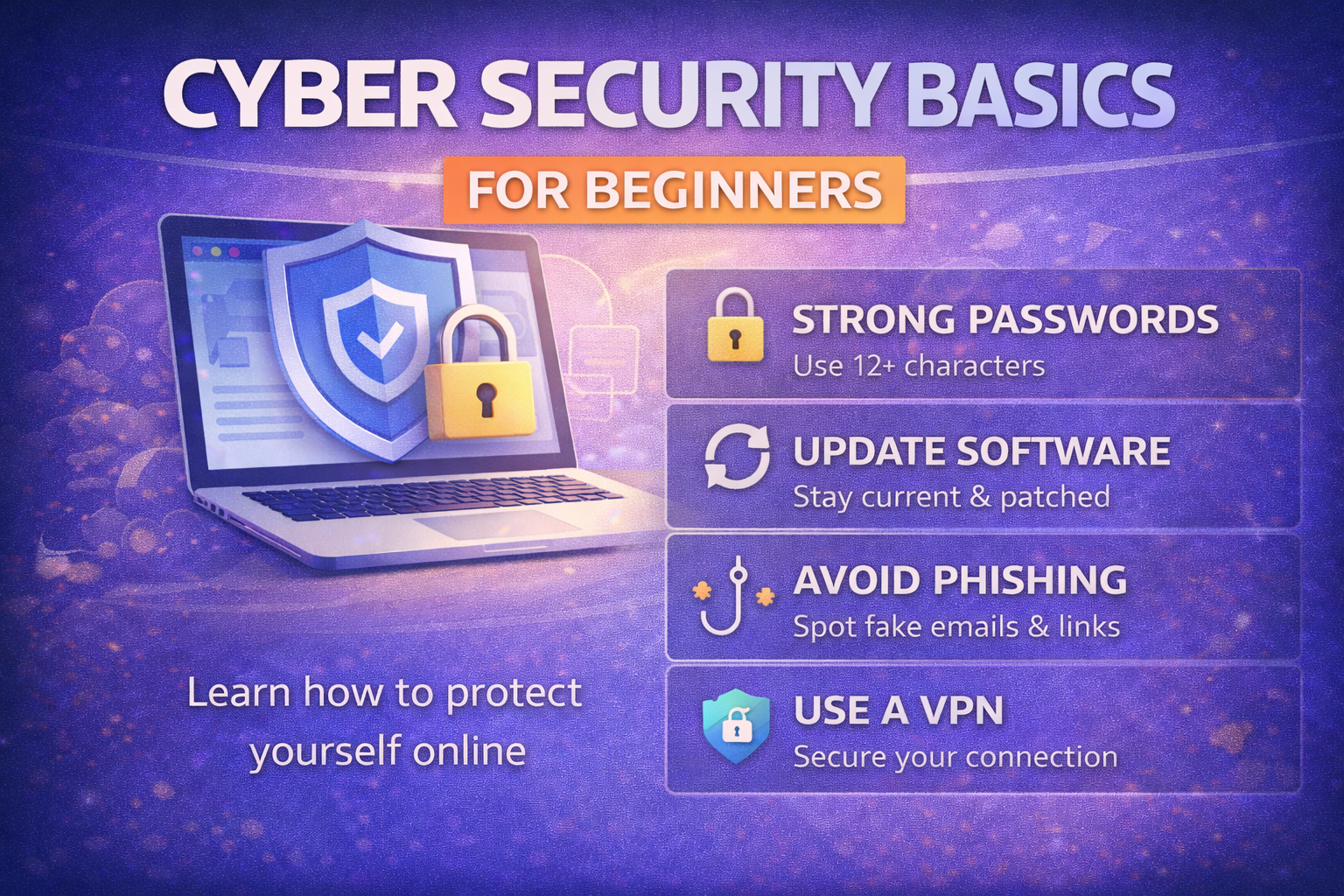
For beginners, a few habits provide the majority of protection:
- Use unique passwords (with a manager if possible)
- Enable two-factor authentication
- Keep devices and apps updated
- Be cautious with links and emails
- Avoid sensitive activity on public networks
These steps are simple, but effective.
And they cover most real-world risks.
Final Verdict: Cybersecurity Is Mostly About Behavior
Cybersecurity can seem overwhelming, but the fundamentals are straightforward.
It’s less about advanced tools—and more about everyday decisions.
You don’t need to be an expert to stay safe.
But you do need to be aware.
In 2026, the biggest security advantage isn’t technology. It’s understanding how small habits shape your overall risk.
Best VPN Deals Right Now
NordVPN ⭐ 4.7/5
- 🔒 Military-grade encryption
- 🌍 60+ countries servers
- ⚡ Fast & stable streaming
Surfshark ⭐ 4.6/5
- 💸 Cheapest long-term plan
- 📱 Unlimited devices
- 🚀 Great for streaming

