VPNs, or virtual private networks, are often promoted as essential tools for online privacy and security. In practice, their role has become more nuanced. As built-in protections improve across devices and networks, many users are left wondering whether a VPN is still necessary—or simply optional.
A VPN works by encrypting your internet connection and routing it through a remote server. This masks your IP address and makes it harder for third parties, including internet service providers, to monitor your activity. The concept is straightforward, but its importance depends heavily on how and where you use the internet.
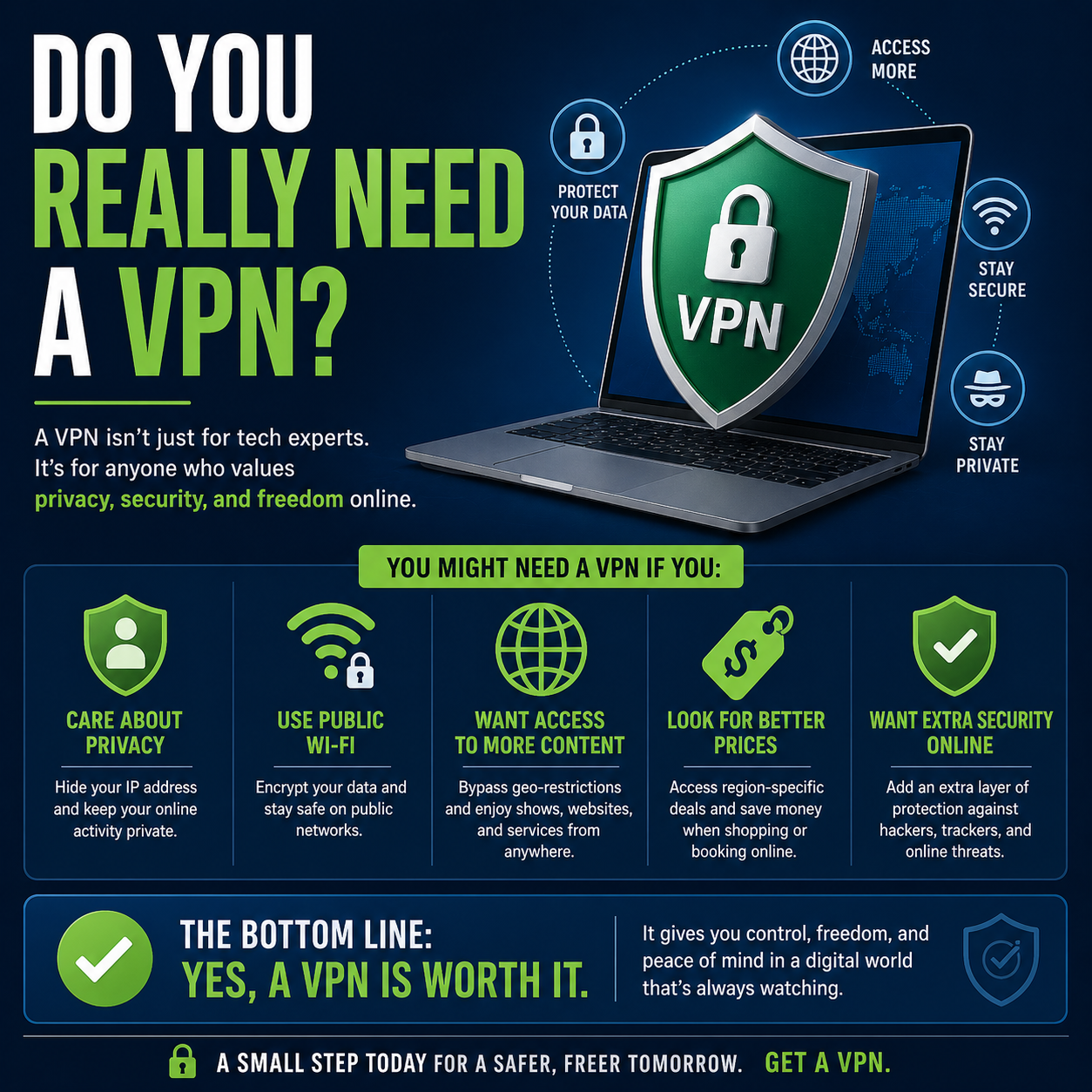
For users on public Wi-Fi networks, VPNs still serve a clear purpose. Open networks in places like airports or cafés can expose data to interception, particularly if security measures are weak. A VPN adds a layer of protection by encrypting traffic, reducing the risk of unauthorized access.
At home, the situation is different.
Most websites now use HTTPS encryption by default, which already secures data exchanged between your browser and the site. Operating systems and browsers have also introduced stronger privacy controls, limiting tracking and improving baseline security. In these cases, a VPN may offer additional privacy—but not necessarily a dramatic increase in safety.
There are also specific use cases where VPNs remain relevant. Remote workers often rely on them to securely access company systems. In regions with restricted internet access, VPNs can help bypass censorship. And for privacy-conscious users, they provide a way to obscure browsing activity from local networks and service providers.
However, VPNs come with trade-offs.
Routing traffic through external servers can reduce connection speeds and increase latency. This is particularly noticeable for gaming, video calls, or large downloads. Additionally, using a VPN means trusting the provider to handle your data responsibly, which introduces a different kind of risk compared to relying solely on built-in protections.
Some features commonly associated with VPNs—like blocking trackers or hiding browsing activity—are now partially addressed by alternative tools. Browser extensions, private browsing modes, and encrypted DNS services can offer similar benefits in specific contexts, often without affecting performance as much.
Still, these alternatives don’t fully replace what a VPN does.
The key difference lies in scope. A VPN protects all internet traffic from your device, while most other tools operate at the browser or app level. For users who want broader coverage, that distinction can be important.
Takeaway: A VPN is no longer a one-size-fits-all necessity. It remains useful in certain scenarios—especially on public networks, for remote access, or in restricted regions—but for everyday browsing on modern devices, its benefits are more situational than universal.

