Ecommerce hosting is often sold as a checklist—SSL, uptime, scalability, done. But anyone who’s run an online store knows that’s not how it plays out in real life.
What matters isn’t what your hosting promises. It’s how your store behaves when people are browsing, adding to cart, and trying to pay—all at the same time.
That’s where the difference between hosting platforms becomes painfully obvious.
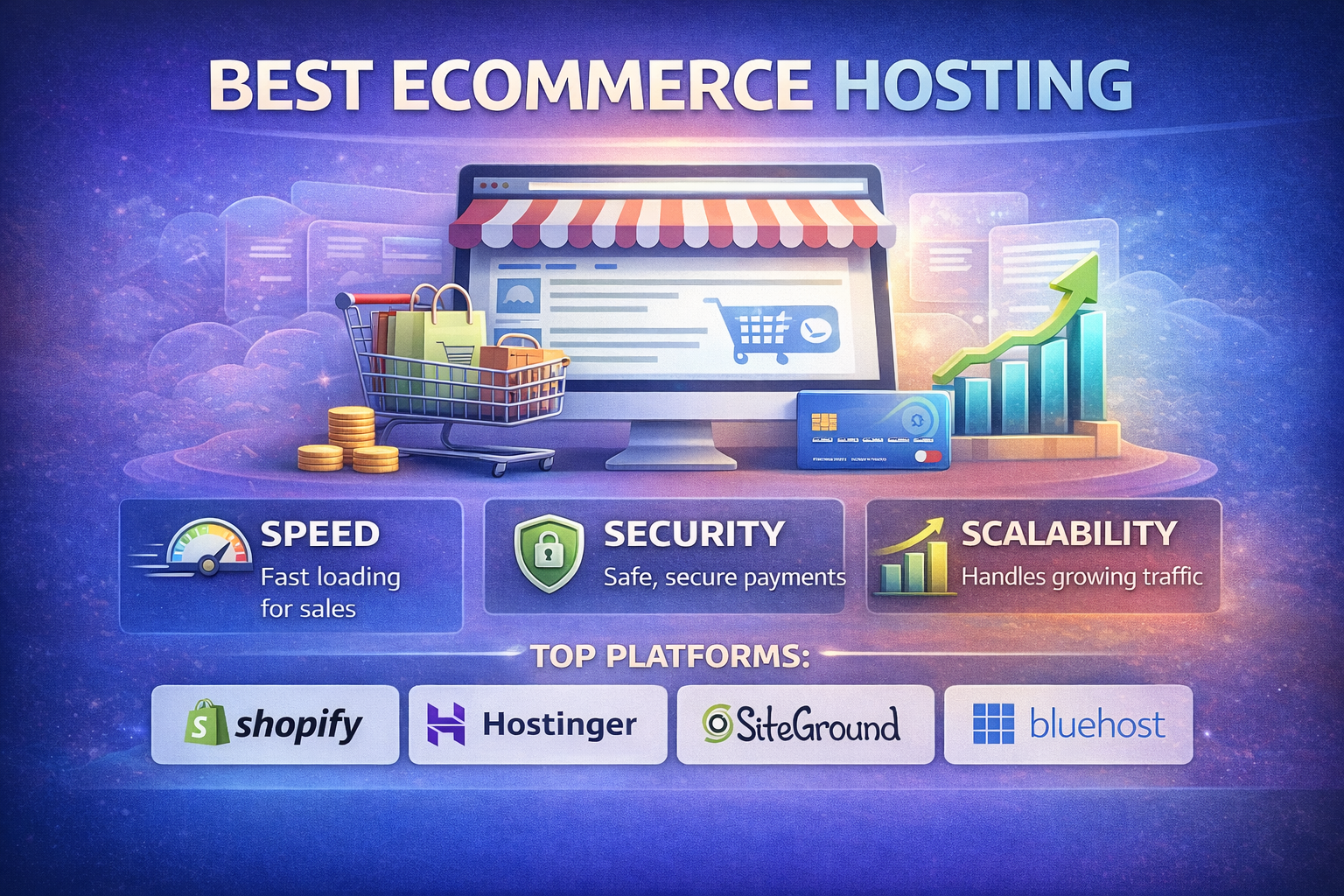
What Ecommerce Hosting Really Needs (Beyond the Basics)
Unlike blogs or portfolio sites, ecommerce platforms are constantly doing work in the background.
Every product view, cart update, and checkout request hits your server. That means hosting isn’t just about loading pages—it’s about handling transactions without slowing down or breaking.
In practical terms, good ecommerce hosting should:
- Keep checkout fast and stable
- Handle traffic spikes (sales, ads, promotions)
- Stay responsive even with many users at once
If it fails at any of these, you lose sales. Not traffic—actual revenue.
⚠️ Affiliate disclosure: We may earn a commission at no extra cost to you.
🔥 Editor's Picks
Best Hosting Deal Right Now
🔥 BEST HOSTING
Hostinger ⭐ 4.9/5
- ⚡ Ultra fast performance
- 💰 From $2.99/month
- 🛡 Free SSL + domain
⚡ Start Your Website Today
Shared Hosting: Fine for Testing, Risky for Selling
Best Hosting Deal Right Now
Hostinger ⭐ 4.9/5
- ⚡ Ultra fast performance
- 💰 From $2.99/month
- 🛡 Free SSL + domain
Shared hosting is often the cheapest way to launch an online store, and many beginners start here.
It works—technically.
You can install WooCommerce, upload products, and start selling. For a small store with low traffic, it might even feel smooth at first.
But ecommerce exposes its limits quickly.
Because resources are shared, performance can drop at the worst possible moments—like during a promotion or traffic spike. And when checkout slows down, customers leave.
That’s not a minor issue. That’s lost money.
Cloud Hosting: Where Things Start to Feel Reliable
Cloud hosting is where ecommerce begins to make sense.
Instead of relying on one server, your store can scale across multiple machines. If traffic increases, your resources adjust. If one server struggles, another takes over.
In real-world use, this means:
- Faster product pages under load
- Stable checkout experience
- Fewer crashes during peak traffic
It’s not just faster—it’s more predictable.
And predictability is everything in ecommerce.
Managed Ecommerce Hosting: The “Don’t Think About It” Option
Then there’s managed hosting—platforms that handle most of the technical work for you.
Think Shopify, managed WooCommerce, or premium cloud providers.
These platforms optimize everything behind the scenes:
- Caching
- Security
- Updates
- Performance tuning
The result is a smoother experience, especially if you’re not technical.
But you pay for that convenience.
And sometimes, you give up flexibility in return.
Real-World Comparison: Where Each Option Breaks (or Holds Up)
Here’s how these hosting types behave when things get real:
Shared hosting
- Fine for setup and testing
- Struggles with real traffic
- Risky for active stores
Cloud hosting
- Handles growth well
- Stable under pressure
- Requires some setup knowledge
Managed ecommerce hosting
- Easiest to run
- Most stable out of the box
- Higher cost, less control
Each one works—just at a different stage.
The Cost Question: Cheap vs Revenue-Safe
This is where many store owners make the wrong decision.
Shared hosting is cheap.
Cloud and managed hosting cost more.
But ecommerce flips the equation.
A slow site doesn’t just annoy users—it reduces conversions. Even a small delay can mean fewer completed purchases.
So the real question isn’t:
“How much does hosting cost?”
It’s:
“How much revenue does bad hosting lose?”
That changes the calculation completely.
Who Should Choose What?
If you’re testing a product idea or building a small store:
- Shared hosting is acceptable
- Keep costs low
If you’re running ads, scaling traffic, or expecting growth:
- Cloud hosting is the safer choice
If you want simplicity and stability above all:
- Managed ecommerce hosting is worth it
And if your store is your business—not just a side project—cheap hosting becomes a liability very quickly.
The Bigger Picture: Hosting as Infrastructure, Not a Feature
Ecommerce hosting isn’t something customers see—but they feel it.
They feel it when pages load instantly.
They feel it when checkout works without friction.
And they definitely feel it when something breaks.
Good hosting is invisible.
Bad hosting is unforgettable.
Final Verdict: The Smart Choice Depends on How Serious You Are
There’s no single “best ecommerce hosting”—only the one that matches your stage.
But one thing is clear:
Shared hosting is not built for serious ecommerce.
If you’re just experimenting, it’s fine.
If you’re trying to build a real business, it’s a risk.
Cloud or managed hosting is where ecommerce actually starts to work the way it should.
It costs more.
But it protects the one thing that matters most: your revenue.
Best Hosting Deal Right Now
Hostinger ⭐ 4.9/5
- ⚡ Ultra fast performance
- 💰 From $2.99/month
- 🛡 Free SSL + domain

