Best Hosting Deal Right Now
Hostinger ⭐ 4.9/5
- ⚡ Ultra fast performance
- 💰 From $2.99/month
- 🛡 Free SSL + domain
Search engines remain one of the most data-intensive tools people use every day. While Google continues to dominate the market, growing concerns around tracking, profiling, and targeted advertising have pushed users to explore more private alternatives.
In response, a new generation of search engines is gaining traction—offering ways to find information online without building detailed user profiles.
Privacy by Design, Not as an Add-On
Among the most established alternatives is DuckDuckGo. It does not track user searches or store personal data, and instead serves results based on keywords alone. Its clean interface and familiar experience have made it one of the easiest transitions for users moving away from Google.
Startpage takes a different approach. It acts as a privacy layer in front of Google Search, delivering Google’s results while stripping away identifying information. This makes it appealing for users who want both strong privacy and familiar search quality.
These platforms show how privacy can be integrated directly into the search experience rather than added later through settings or extensions.
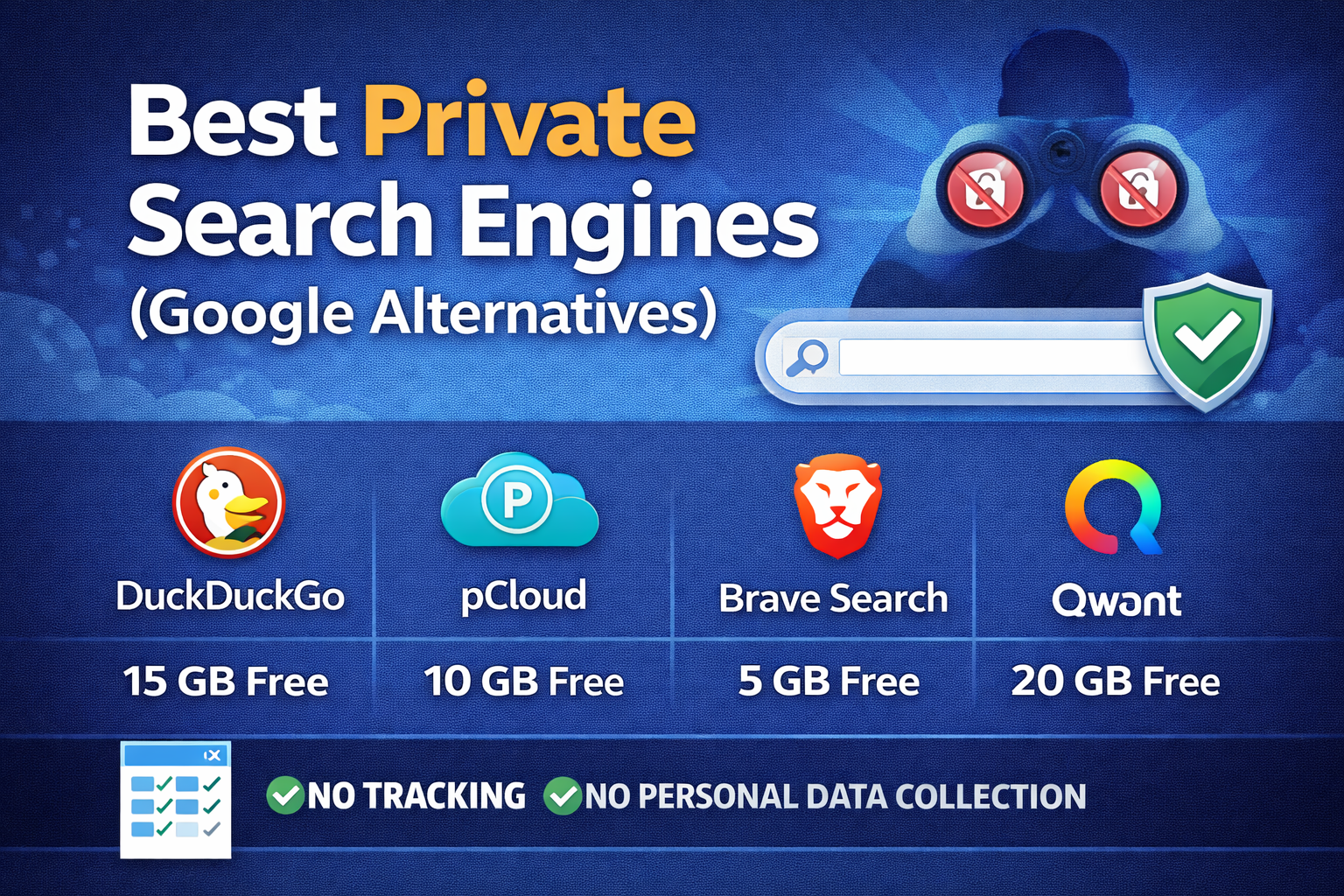
Independent Indexes vs. Aggregated Results
Not all private search engines work the same way. Some, like Brave Search, rely on their own independent index of the web. This allows them to operate without depending on larger providers, potentially offering more transparency and control over results.
Others, including DuckDuckGo and Startpage, aggregate results from multiple sources. This can improve coverage and relevance but may still involve indirect reliance on larger search infrastructures.
The distinction matters because it shapes how results are ranked—and how independent a platform truly is.
Regional Players and Open-Source Options
European-based Qwant emphasizes strict data protection standards and does not track users or personalize search results. It also integrates news and social content in a way that reflects regional preferences.
Meanwhile, Searx (and its hosted version, SearxNG) represents a more technical option. As an open-source metasearch engine, it allows users to run their own instance, combining results from multiple sources while maintaining full control over data.
These tools appeal to users who want either regulatory alignment or deeper customization.
Trade-Offs in Relevance and Convenience
Switching to a private search engine often comes with subtle trade-offs. Personalized results—based on location, search history, and behavior—can improve convenience but are largely absent in privacy-focused tools.
As a result, users may need to refine queries more often or rely on additional filters to find exactly what they need. Features like integrated maps, shopping results, or real-time updates may also be less robust compared to Google’s ecosystem.
Still, for many users, the reduction in tracking outweighs these limitations.
Why It Matters Now
The shift toward private search reflects a broader change in how users think about data ownership. With increased awareness of how personal information is collected and used, search engines have become a focal point in the privacy conversation.
At the same time, competition in this space is gradually improving the quality and usability of alternatives—making them more viable for everyday use.
The Bottom Line
Private search engines are no longer niche tools—they are becoming practical alternatives for users who want more control over their data. While no single option fully replicates Google’s scale and features, several now offer a strong balance of privacy and functionality.
As the search landscape evolves, users are gaining more choice in how they access information—and how much of their data they share in the process.
Best Hosting Deal Right Now
Hostinger ⭐ 4.9/5
- ⚡ Ultra fast performance
- 💰 From $2.99/month
- 🛡 Free SSL + domain

