Best Hosting Deal Right Now
Hostinger ⭐ 4.9/5
- ⚡ Ultra fast performance
- 💰 From $2.99/month
- 🛡 Free SSL + domain
Free cloud storage has become a default part of digital life, powering everything from document sharing to photo backups. But while most services advertise “free” plans, the actual value varies widely—especially in terms of storage limits, privacy, and ecosystem integration.
In 2026, users are less focused on just how many gigabytes they get, and more on how those gigabytes fit into their daily workflows.
The Big Three: Familiar, but Not Equal
Google Drive, Microsoft OneDrive, and Dropbox remain the most widely used platforms, largely because they are built into broader ecosystems.
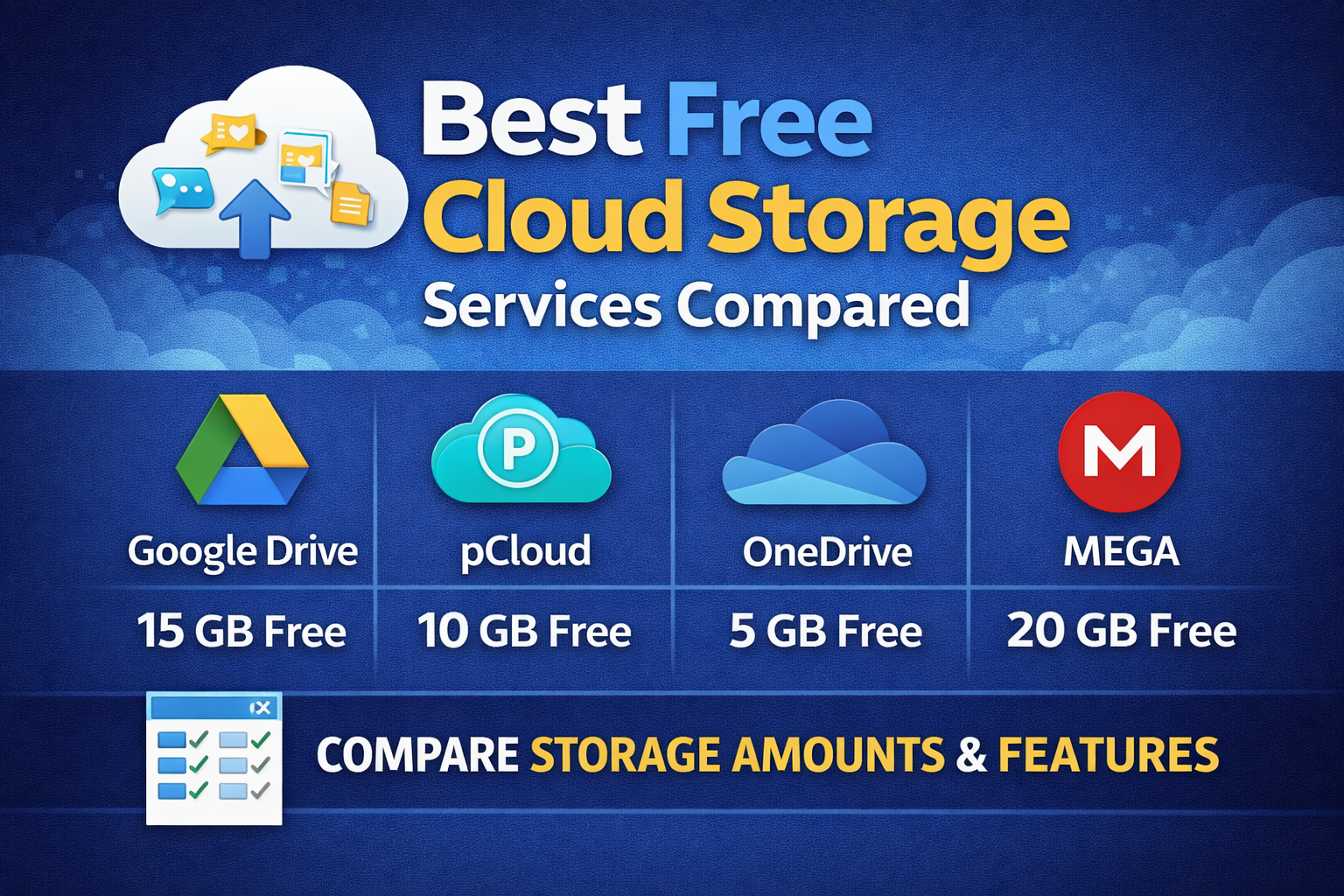
Google Drive continues to offer one of the most generous free tiers at 15GB, though that space is shared across Gmail and Google Photos. This makes it particularly useful for users already relying on Google Workspace tools like Docs and Sheets, where real-time collaboration is a core feature.
OneDrive provides 5GB for free and is tightly integrated with Windows and Microsoft 365. It’s often the default choice for users working with Office files, offering seamless syncing and built-in version control.
Dropbox, by contrast, offers just 2GB on its free plan. Its strength lies in reliability and file syncing—especially for large or frequently updated files—but the limited storage makes it less practical for long-term free use.
Storage Leaders: More Space, Different Trade-Offs
Some newer or less mainstream platforms focus on offering more free storage upfront. MEGA stands out with around 20GB available on free accounts, often the highest among major providers.
This larger allowance comes with a focus on privacy, including end-to-end encryption. However, users may encounter transfer limits, especially when moving large files frequently.
pCloud offers around 10GB for free and emphasizes flexibility, including optional client-side encryption and lifetime paid plans. It sits somewhere between mainstream usability and privacy-focused design.
These services appeal to users who prioritize storage capacity or security over ecosystem integration.
Ecosystem vs. Independence
One of the clearest dividing lines is whether a service is part of a larger platform. Google Drive and OneDrive are deeply embedded in productivity suites, making them convenient but also tying users into specific ecosystems.
Independent services like MEGA or pCloud offer more separation, which can be beneficial for privacy or long-term flexibility. But they may lack the seamless collaboration features that come with Google Docs or Microsoft Office integration.
In practice, many users now combine services—using one for collaboration and another for backup or private storage.
What Free Plans Actually Include
Most free cloud storage plans cover the basics: file uploads, downloads, and sharing via links. Encryption in transit and at rest is standard across major providers.
However, limitations are common. These can include reduced upload speeds, restricted file version history, and fewer sharing controls. Advanced features—such as zero-knowledge encryption or detailed access permissions—are often reserved for paid tiers.
Even storage itself can be misleading. In Google’s case, email and photos count toward the same 15GB limit, meaning available space can shrink quickly depending on usage.
Choosing the Right Option
The best free cloud storage service depends largely on how it will be used.
For collaboration and everyday productivity, Google Drive remains a practical choice. For Windows-based workflows, OneDrive integrates naturally. Dropbox still appeals to users who prioritize syncing reliability over storage size.
Meanwhile, MEGA and pCloud offer compelling alternatives for users who want more space or stronger privacy controls without immediate cost.
The Bottom Line
Free cloud storage is no longer just about maximizing space—it’s about balancing convenience, privacy, and long-term usability. While the major platforms dominate through integration, newer services are pushing the market forward with more generous limits and stronger security features.
For most users, the best approach may not be choosing one service, but understanding how each fits into a broader digital workflow.
Best Hosting Deal Right Now
Hostinger ⭐ 4.9/5
- ⚡ Ultra fast performance
- 💰 From $2.99/month
- 🛡 Free SSL + domain

