Best VPN Deals Right Now
NordVPN ⭐ 4.7/5
- 🔒 Military-grade encryption
- 🌍 60+ countries servers
- ⚡ Fast & stable streaming
Surfshark ⭐ 4.6/5
- 💸 Cheapest long-term plan
- 📱 Unlimited devices
- 🚀 Great for streaming
Free VPNs sound like an easy win. You get privacy, access to blocked content, and a sense of security—without paying anything. But once you spend time using them, the trade-offs become hard to ignore.
That’s where Surfshark enters the conversation.
It’s not the most expensive VPN, but it’s far from free. And that raises a simple question: what are you really getting for the money?
The Real Cost of “Free”
Free VPNs don’t run on goodwill. They operate under tight budgets, which usually means limitations somewhere—speed caps, data limits, fewer servers, or more concerningly, monetization through ads or data collection.
In practical terms, that can look like:
- Slower connections during peak hours
- Frequent disconnections
- Limited access to streaming platforms
Some well-known options like Proton AG’s Proton VPN offer a more privacy-focused free tier, but even those come with restrictions on speed and server choice.
You’re not paying with money.
You’re paying with experience—or sometimes your data.
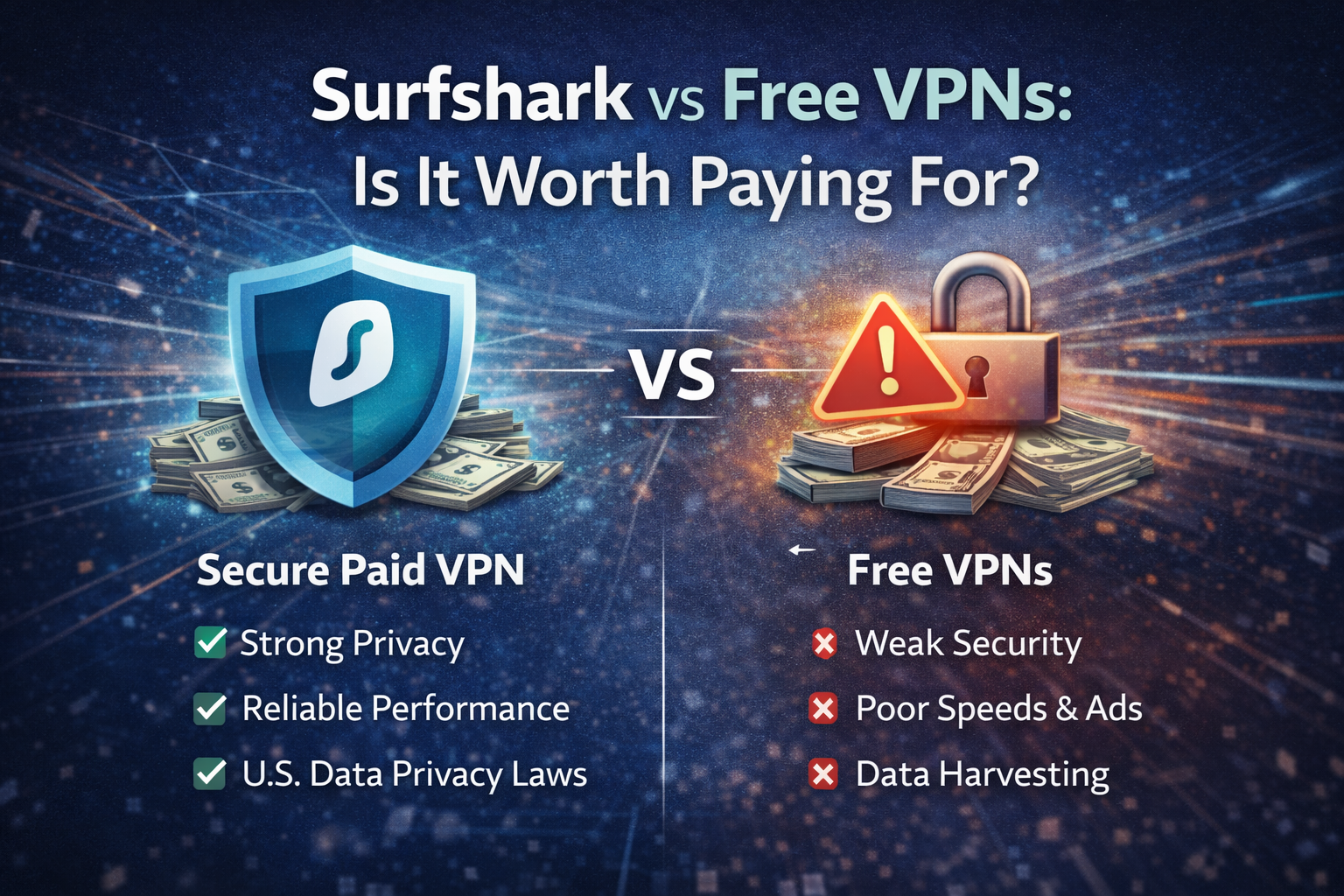
Surfshark: What You Actually Get
Surfshark positions itself as a budget-friendly premium VPN. It removes most of the friction you’ll encounter with free services: no data limits, access to a wide server network, and consistent performance across devices.
One standout feature is unlimited device connections. That means one subscription can cover your phone, laptop, smart TV, and more—something free VPNs rarely support in any meaningful way.
It feels less like a workaround.
And more like a proper tool.
Speed and Reliability: The Everyday Difference
The biggest gap between free VPNs and Surfshark shows up in daily use.
Free VPNs often struggle with speed because too many users are sharing too few servers. That leads to buffering, lag, and inconsistent performance. Surfshark, using modern protocols like WireGuard, delivers far more stable speeds.
It’s not always the fastest VPN on the market.
But it’s reliably fast enough for streaming, browsing, and downloads without frustration.
Streaming and Content Access
If your goal is accessing region-locked content, free VPNs are hit or miss. Many are blocked outright by platforms like Netflix, or only work intermittently.
Surfshark performs much better here. It supports multiple streaming regions and adapts more quickly when services block certain servers.
That doesn’t mean it’s perfect.
But it’s consistent in a way free VPNs rarely are.
Security and Privacy: A Meaningful Gap
This is where the difference becomes more than just convenience.
Free VPNs vary widely in how they handle user data. Some log activity, others inject ads, and a few have been caught selling browsing data to third parties. Even reputable free options have to balance costs somehow.
Surfshark, by contrast, offers audited no-logs policies and standard encryption used across the industry. Features like ad blocking and malware protection add another layer of security.
It’s not just about being private.
It’s about being predictably private.
Pricing vs Value
Surfshark’s pricing sits on the lower end of paid VPNs, especially with long-term plans. While it’s not free, it’s often close enough that the upgrade feels reasonable once you’ve experienced the limitations of free options.
Monthly pricing is less compelling.
But long-term, the value proposition is strong.
Pros and Cons
Surfshark Pros
- Unlimited devices on one account
- Stable speeds and performance
- Reliable streaming access
- Strong security and privacy features
Surfshark Cons
- Not the absolute fastest VPN available
- Requires upfront commitment for best pricing
Free VPN Pros
- No cost
- Easy to try without commitment
Free VPN Cons
- Speed and data limitations
- Inconsistent performance
- Potential privacy concerns
- Poor streaming support
Who Should Pay (and Who Probably Shouldn’t)
If you use a VPN occasionally—checking something quickly or browsing casually—a free VPN might be enough.
But if you stream regularly, care about consistent privacy, or use multiple devices, the limitations show up fast. That’s where Surfshark starts to make more sense.
It’s not about features on a checklist.
It’s about removing friction from everyday use.
The Bigger Picture
The gap between free and paid VPNs has narrowed slightly over the years, especially with privacy-focused free tiers entering the market. But the fundamental trade-off remains: free services optimize for scale, while paid ones optimize for experience.
Surfshark sits in an interesting middle ground—closer to premium performance, but priced for accessibility.
The Bottom Line
So, is Surfshark worth paying for over a free VPN?
In most cases, yes.
Free VPNs can work in a pinch, but they come with compromises that become obvious over time. Surfshark doesn’t eliminate every limitation, but it removes the ones that matter most.
Final verdict:
If you want a VPN that works consistently without thinking about it, paying for Surfshark is a practical upgrade. Free VPNs are convenient—but rarely dependable.
Best VPN Deals Right Now
NordVPN ⭐ 4.7/5
- 🔒 Military-grade encryption
- 🌍 60+ countries servers
- ⚡ Fast & stable streaming
Surfshark ⭐ 4.6/5
- 💸 Cheapest long-term plan
- 📱 Unlimited devices
- 🚀 Great for streaming

