Email remains one of the most widely used digital tools—and one of the most exposed. While mainstream providers offer convenience, they often rely on data collection to support their business models.
That has led to growing interest in privacy-focused email services. These platforms aim to limit tracking, encrypt messages, and reduce the amount of personal data stored or analyzed.
But not all “secure email” services work the same way.
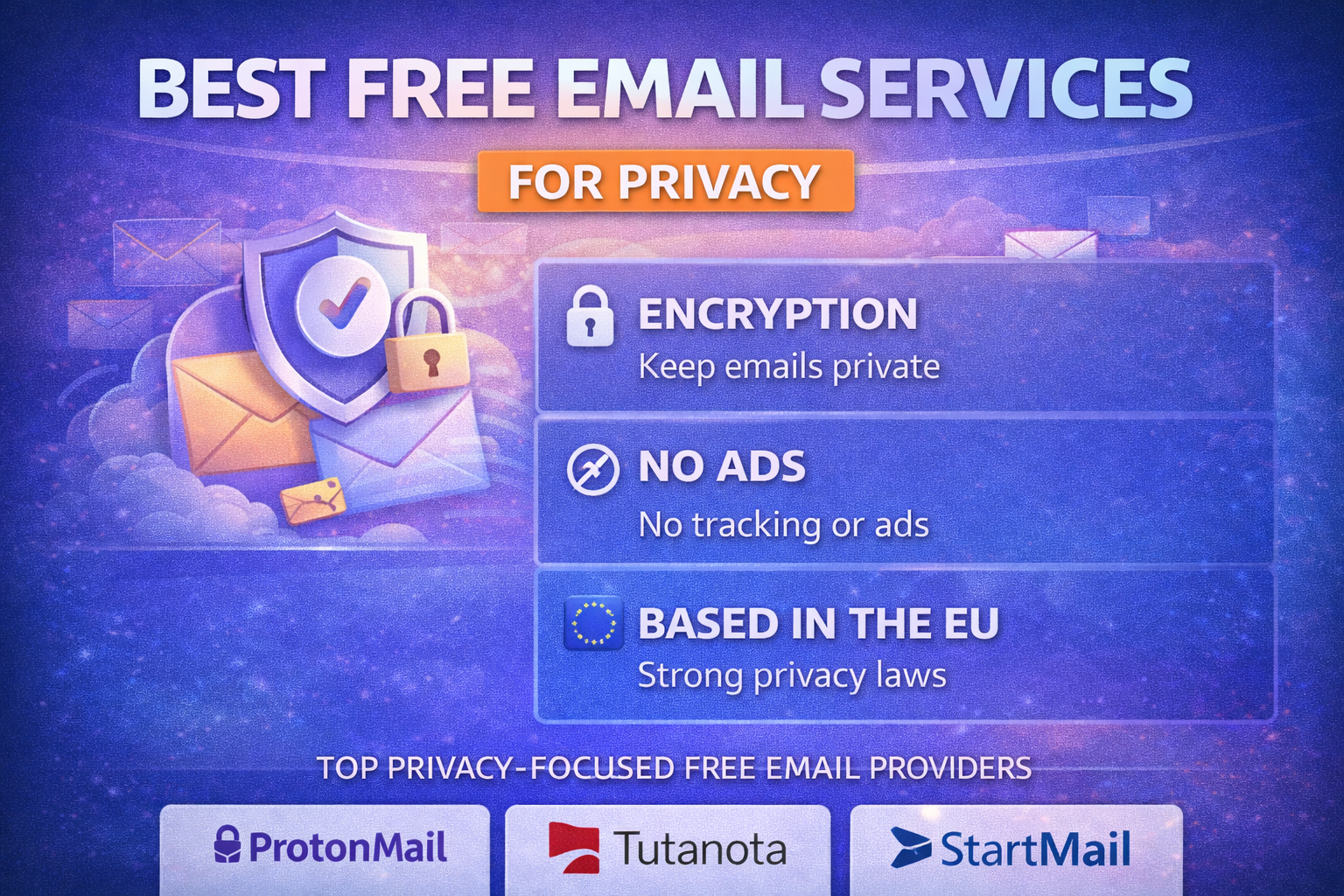
What Privacy Means in Email Today
In simple terms, privacy-focused email services try to minimize how much of your data is visible—to companies, advertisers, or third parties.
This usually involves:
- End-to-end encryption (only sender and receiver can read messages)
- No ad tracking or data profiling
- Limited logging of user activity
Some services go further, offering anonymous sign-up or storing data in privacy-friendly jurisdictions.
Still, privacy often comes with trade-offs in usability or features.
⚠️ Affiliate disclosure: We may earn a commission at no extra cost to you.
🔥 Editor's Picks
Best Hosting Deal Right Now
🔥 BEST HOSTING
Hostinger ⭐ 4.9/5
- ⚡ Ultra fast performance
- 💰 From $2.99/month
- 🛡 Free SSL + domain
🚀 Get 80% OFF Hostinger
Proton Mail: Strong Encryption with a Familiar Feel
Best Hosting Deal Right Now
Hostinger ⭐ 4.9/5
- ⚡ Ultra fast performance
- 💰 From $2.99/month
- 🛡 Free SSL + domain
Proton Mail is one of the most widely recognized privacy email platforms. Based in Switzerland, it benefits from strict data protection laws and offers built-in end-to-end encryption.
In everyday use, it feels closer to traditional email services:
- Clean interface
- Mobile and web apps
- Easy onboarding
However, encryption works best when both users are on Proton Mail. Sending secure emails to external services requires extra steps, which can affect convenience.
It’s a balanced approach—privacy without a steep learning curve.
Tutanota: Privacy First, Simplicity Second
Tutanota takes a slightly different path. It encrypts more parts of the email experience by default, including subject lines and contacts.
The platform is minimal by design:
- Lightweight interface
- Open-source components
- Focus on security over features
That simplicity can feel limiting, especially for users used to feature-rich inboxes. But it also reduces complexity—and potential vulnerabilities.
Zoho Mail: Privacy Without Full Encryption
Zoho Mail isn’t strictly a “secure email” provider in the same sense, but it emphasizes privacy in a different way.
It offers:
- No ads
- Business-focused email tools
- Data protection policies without aggressive tracking
Unlike Proton Mail or Tutanota, Zoho doesn’t provide full end-to-end encryption by default. Instead, it focuses on keeping user data private from advertisers.
For some users, that’s enough—especially in a work context.
Mailfence: Traditional Email with Added Security Tools
Mailfence combines familiar email features with optional encryption tools.
It supports:
- OpenPGP encryption
- Digital signatures
- Calendar and document integration
The experience feels closer to classic email platforms, which can make it easier to adopt. But encryption features may require manual setup, depending on how you use it.
It’s flexible—but slightly more technical.
Comparing the Options
Each service approaches privacy differently:
- Proton Mail focuses on usability and strong encryption
- Tutanota prioritizes deeper encryption with a simpler interface
- Zoho Mail emphasizes privacy without full encryption
- Mailfence offers flexibility with optional security tools
The differences aren’t just technical—they affect how you use email day to day.
The Trade-Offs: Privacy vs Convenience
Privacy-focused email services tend to limit certain features common in mainstream platforms.
For example:
- Search functions may be less powerful (due to encryption)
- Integrations with third-party apps can be limited
- Recovery options may be stricter
These are not flaws—they’re side effects of stronger privacy models.
The key question is how much convenience you’re willing to trade for data protection.
Why This Matters Now
As concerns about data tracking and digital privacy continue to grow, email remains a central point of exposure.
Switching to a privacy-focused provider doesn’t eliminate all risks, but it can reduce:
- Data collection by service providers
- Exposure to targeted advertising
- Reliance on large-scale data ecosystems
For many users, that shift is becoming more relevant—not just optional.
Final Takeaway
Free email services focused on privacy are no longer niche tools. They offer viable alternatives to mainstream platforms, each with different balances between security, usability, and features.
The right choice depends on how much privacy you need—and how much complexity you’re willing to accept in return.
Best Hosting Deal Right Now
Hostinger ⭐ 4.9/5
- ⚡ Ultra fast performance
- 💰 From $2.99/month
- 🛡 Free SSL + domain

