German retailer Mindfactory’s latest sales data offers an interesting snapshot of the GPU market in early 2026. Covering weeks 9–11 of the year (March 1–15), the figures suggest that AMD has taken the lead in GPU sales, with its Radeon RX 9000 series proving especially popular among buyers.
According to statistics shared by TechEpiphanyYT on X, AMD accounted for 55.6% of Mindfactory’s GPU sales during this period. At the top of the list sits the Radeon RX 9070 XT, which alone captured 25.6% of total sales, making it the retailer’s best-selling graphics card. Close behind is the RX 9060 XT, holding 20.3% of the market share.
Despite AMD’s strong showing at the top, NVIDIA still fills most of the remaining top positions. The RTX 5080 ranks third with 11.8%, followed by the RTX 5070 Ti (9%), while both the RTX 5060 and RTX 5070 each account for 7% of sales. The flagship RTX 5090 appears further down the list with 5.3%.
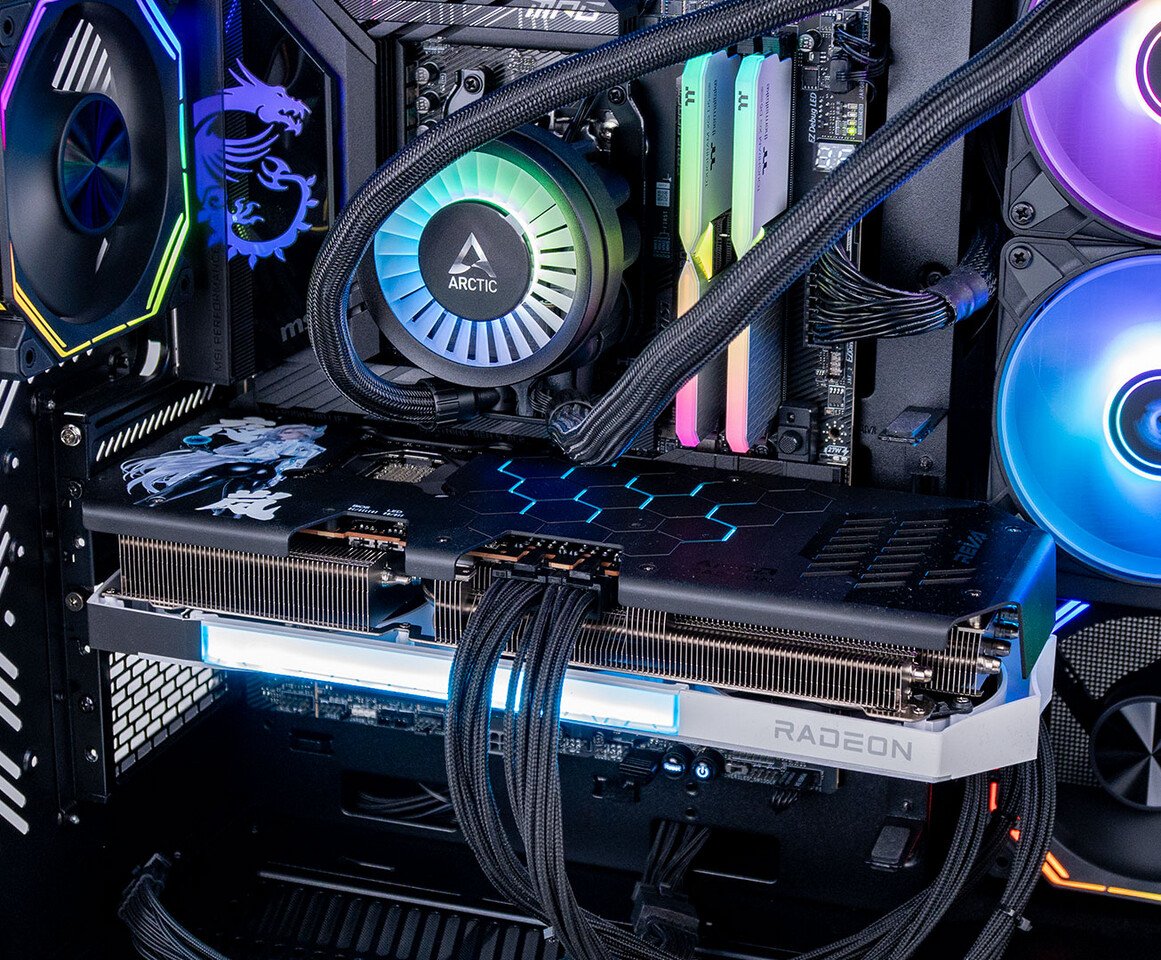
AMD’s previous-generation cards also appear deeper in the rankings. The Radeon RX 7600 comes in eighth place, while higher-end RDNA 3 models such as the RX 7900 XTX, RX 7900 XT, and RX 7700 XT occupy the 10th, 11th, and 12th spots respectively.
While it may seem unusual to see AMD leading in a market where NVIDIA typically dominates globally, this pattern isn’t entirely new for Mindfactory. Historically, the German retailer has often reported stronger AMD sales compared with broader global averages.
However, a more worrying trend emerges when looking at overall volume. GPU sales during the period reportedly dropped to about one-third of their usual levels. The decline is likely tied to a combination of limited stock availability and sharply rising hardware prices. Even though some recent reports suggest AMD GPU prices may be starting to stabilize slightly, the overall cost of building or upgrading a PC remains high.
In the end, the data paints a mixed picture. AMD may be winning the sales battle at this particular retailer, but the bigger story is the shrinking market itself. When prices climb too high and supply becomes unpredictable, even enthusiastic PC builders start to hold back. If the industry wants to revive demand, stabilizing supply chains and bringing prices closer to reality may be just as important as launching the next powerful GPU.
